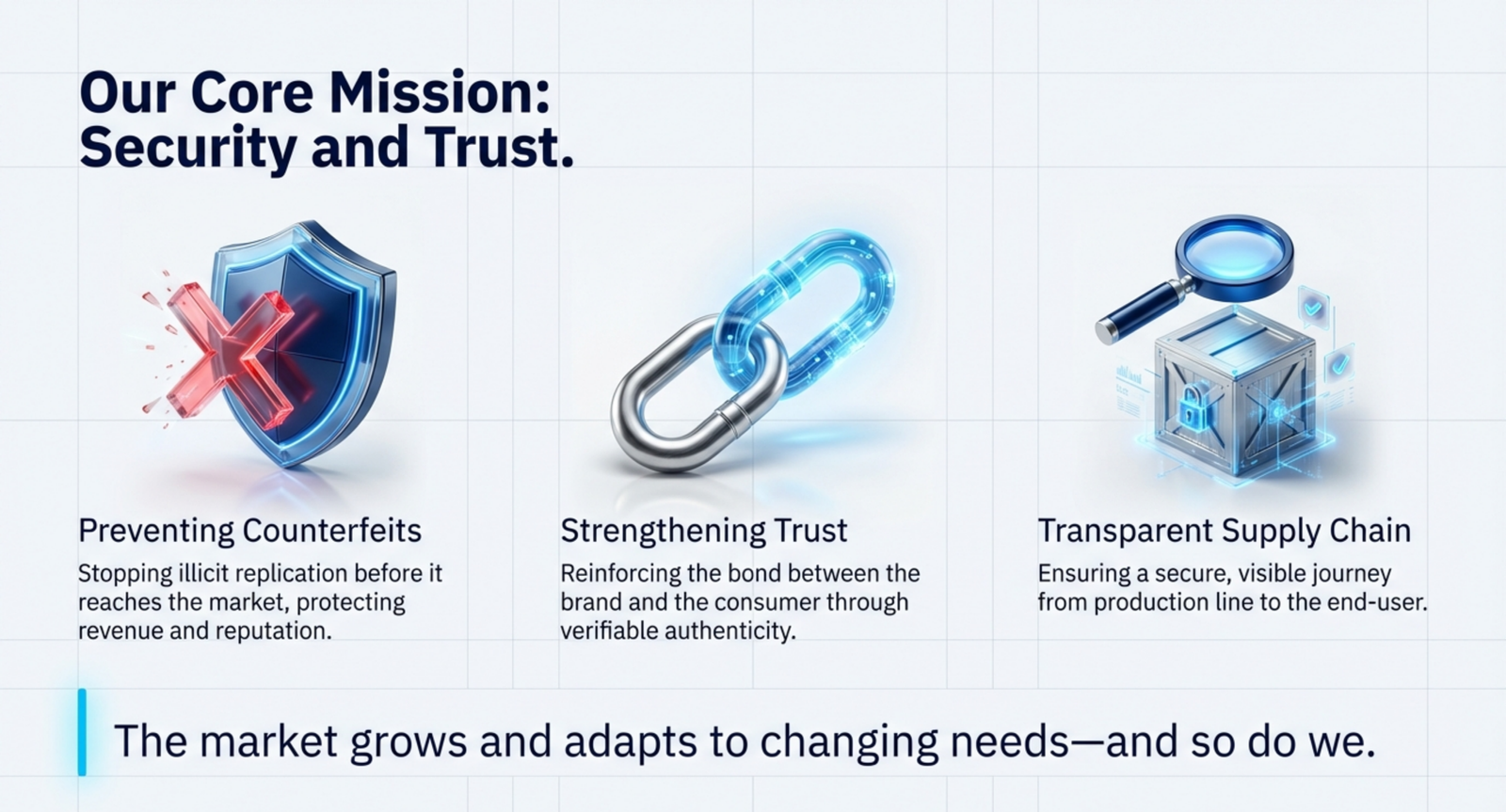

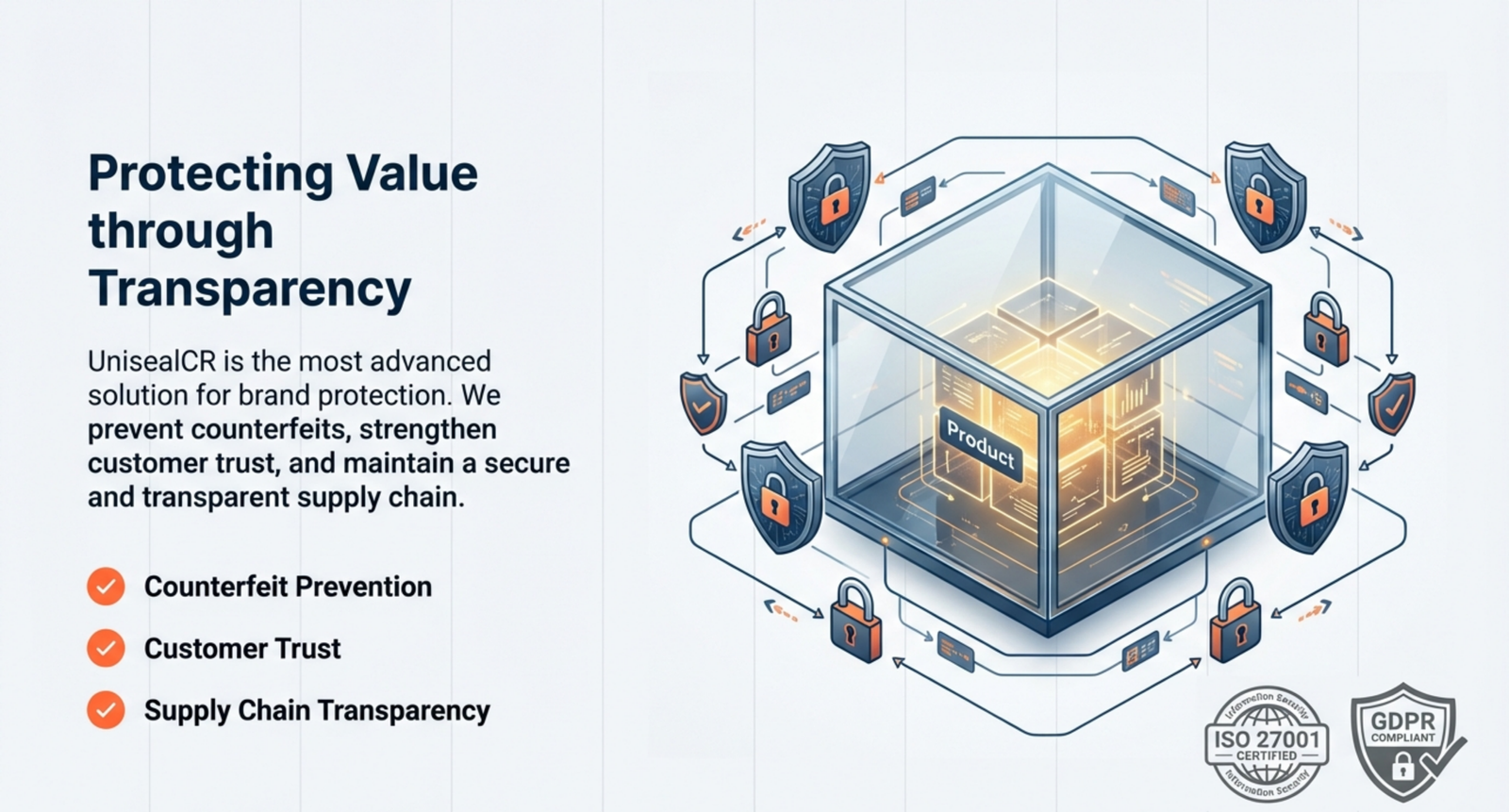
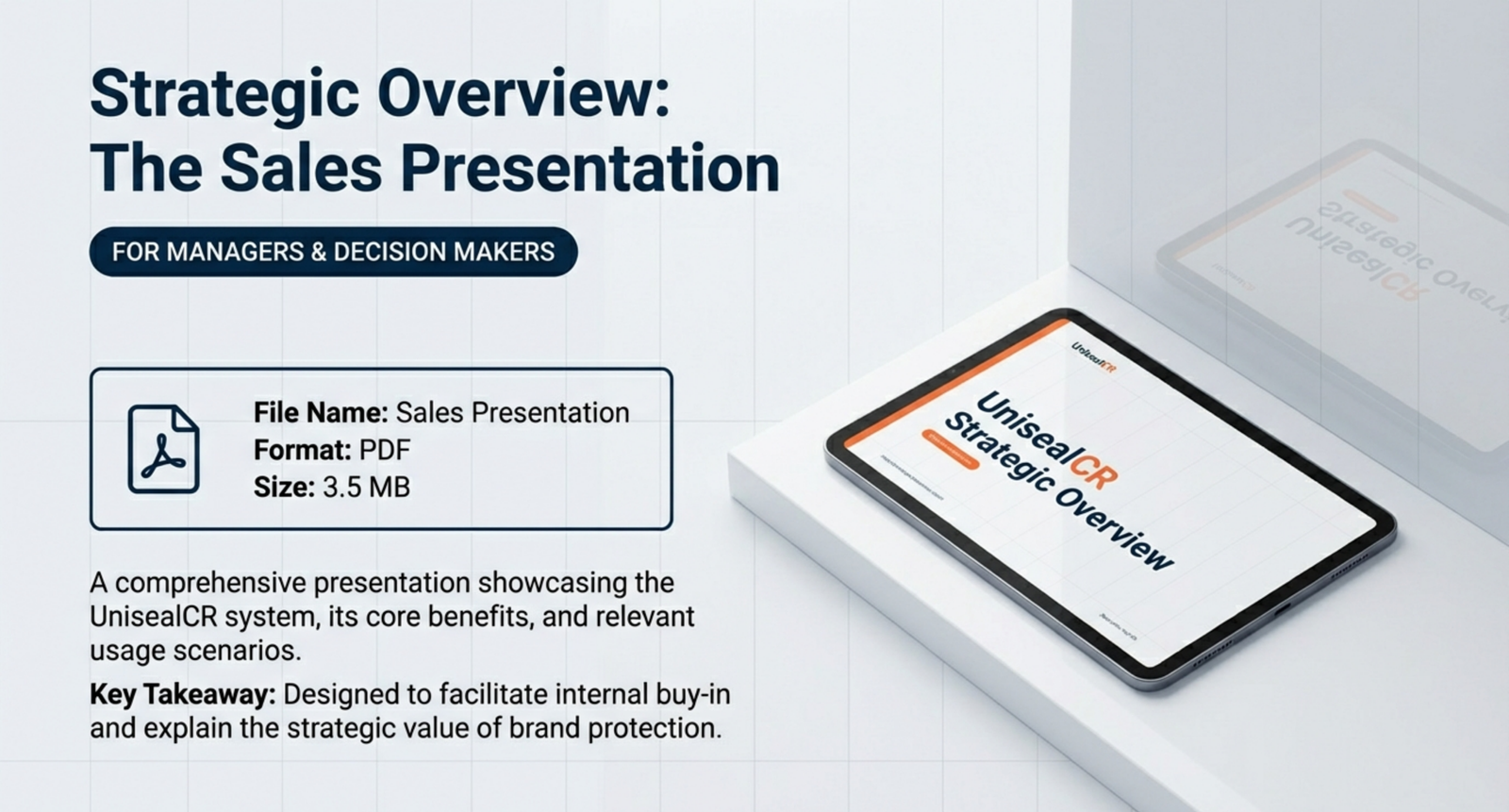
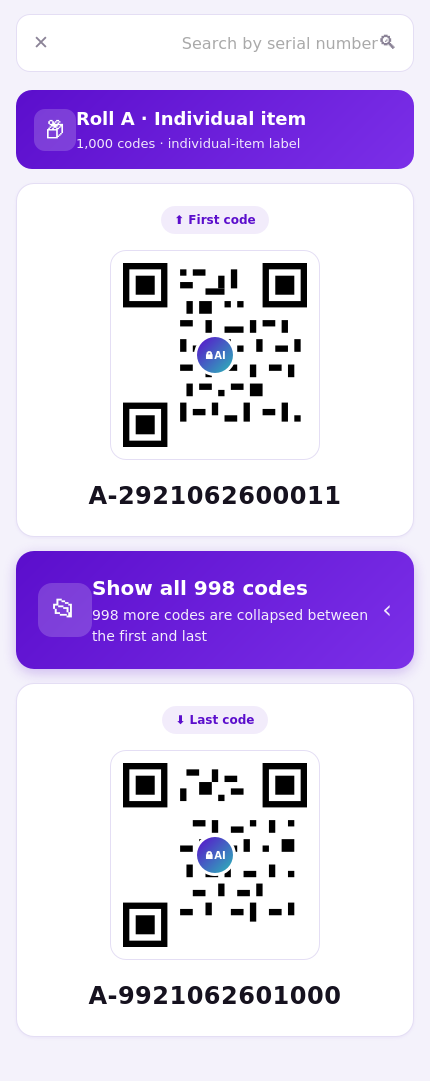
UnisealCR creates a cryptographically generated QR identity for each physical item, produced mathematically at the moment of printing. The sensitive cryptographic seed is not retained after generation — only non-sensitive identifiers, verification metadata, and event records are kept. This reduces the risk of database-based code theft and makes unauthorized regeneration or mass duplication operationally detectable through the validation network.
1.Focus & Goal of the Project
The project develops UnisealCR (“Hotam”), a multi-layer product authentication and supply-chain integrity platform designed to protect physical products against counterfeiting, unauthorized production overruns, certificate fraud, and supply-chain manipulation.
The core innovation is the creation of a cryptographically generated QR identity for each physical item, generated mathematically at the moment of printing. The sensitive cryptographic seed is not stored after generation, while only non-sensitive identifiers, verification metadata, and event records are retained.
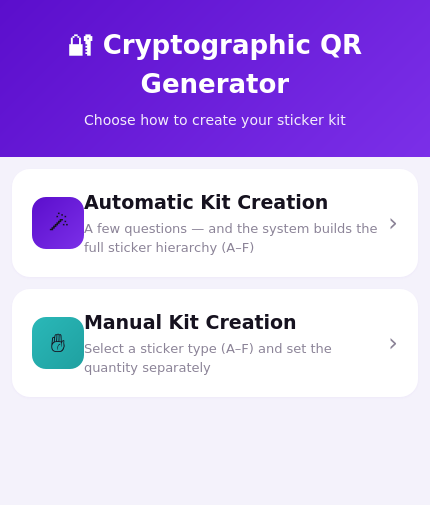
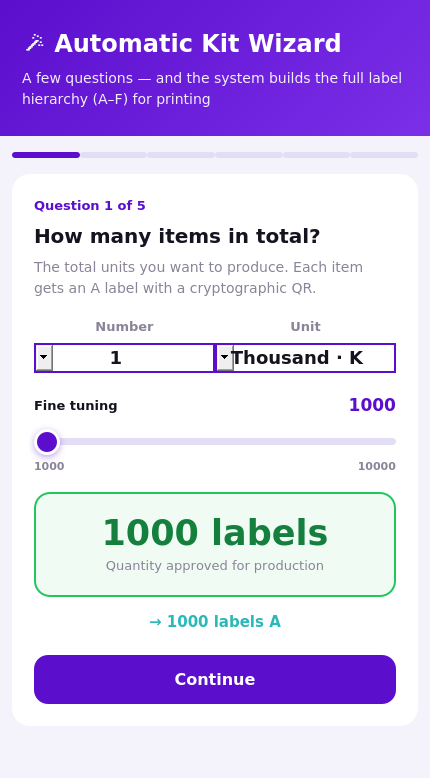
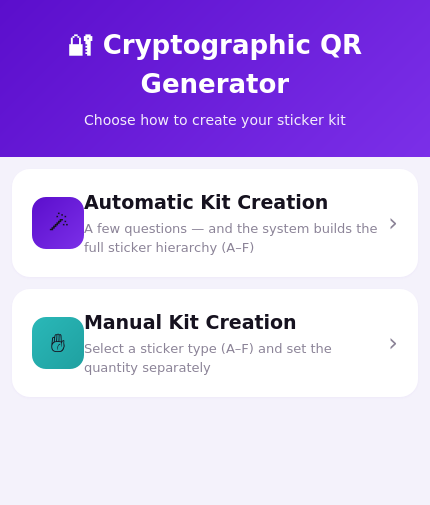
Full logistics-hierarchy coverage — six label types
This enables item-level traceability while maintaining the ability to validate larger logistics units such as boxes, pallets, containers, and shipping documents. Box-level labels may optionally integrate RFID or NFC capabilities for remote cargo-integrity scanning.

A two-layer, tamper-evident event ledger
Each product is connected to a hash-linked event ledger with two data layers:
- Public layer — a consumer-facing “Display Window” providing authenticity status, product information, scan history where applicable, and a downloadable digital certificate.
- Private layer — a restricted operational layer containing sensitive data such as ownership identity, GPS evidence, validation decisions, internal audit records, and anomaly-investigation details.


A dedicated Validity Engine manages product states — valid, grace-period, expired, and invalid/suspicious. The system supports transparent retroactive validation outside the factory geofence when necessary; such actions are permanently recorded in the public or audit layer, creating transparency rather than silently blocking legitimate operational exceptions.
The platform also includes anomaly detection based on a combination of active ownership declarations, passive scan-pattern analysis, GPS evidence, and logistics-chain consistency checks — designed to detect unauthorized identifier reuse, abnormal geographic movement, duplicate scans, factory overruns, and potential label leakage.
In addition, UnisealCR supports real-time revocable certification documents (kosher, quality, compliance, or shipment certificates) linked directly to product identity. A robot-character UX layer (“Spektor”) and multilingual support make complex product states understandable to non-technical users.
Goal
To create a scalable digital-trust infrastructure for physical products, enabling manufacturers, regulators, certification bodies, distributors, retailers, and consumers to verify product authenticity and supply-chain integrity in real time.
2.Technical & Scientific Challenge
The project involves significant R&D challenges and development risks across six areas:
Print-time cryptographic generation at industrial speed
Embedding mathematical cryptographic-identity generation into industrial printing workflows — secure generation, controlled print authorization, verification, and post-print seed destruction — without slowing high-speed production lines.
Tamper-evident per-product event ledger at scale
Maintaining millions of lightweight, hash-linked event ledgers where each event links to the previous one, making retroactive manipulation detectable while remaining efficient for large-scale deployment.
Dual-layer data architecture
Separating public consumer-facing information from private operational and regulatory data, requiring robust role-based access, auditability, and secure handling of ownership, location, and validation data.
Geofencing and anomaly fusion
Combining GPS location, scan timing, declared ownership, logistics hierarchy, and passive behavioral patterns to generate reliable anomaly alerts while minimizing false positives.
Race-condition-proof state transitions
Synchronizing product-state changes across decentralized scans (consumer, factory, regulator, shipping), grace periods, retroactive validation, and revocation — preventing replay attacks and race-condition exploits.
Unauthorized overrun detection
Detecting cases where a contracted factory or printing provider attempts to produce additional unauthorized batches, via secure print-order control, event reconciliation, and serial-range monitoring.
3.Differentiation from the State of the Art
Existing serialization and QR-based traceability solutions generally rely on codes stored in databases, leaving them vulnerable to copying, database leakage, unauthorized reuse, and weak linkage between the physical product and its digital identity. UnisealCR differs by combining several mechanisms into one integrated product-trust infrastructure:
Print-time cryptographic identity generation
The sensitive seed is generated at print time and not retained, reducing reliance on a stored database of reusable codes and limiting unauthorized regeneration or mass production.
Full logistics-hierarchy coverage
Beyond item-level QR codes — validating individual products and larger logistics structures from item to box, pallet, container, and shipping document.
Tamper-evident per-product event ledger
Each product records its operational story over time, making manipulation, missing steps, and suspicious behavior easier to detect.
Public and private trust layers
Consumer transparency separated from sensitive operational data, with permissioned access for manufacturers, regulators, and certification bodies.
Transparent retroactive validation
Controlled exceptions are permanently recorded rather than silently blocked — balancing operational flexibility with audit transparency.
Real-time revocable certification
Certificates linked to a product, batch, shipment, or logistics unit can be updated or revoked in real time — relevant for kosher, quality, pharma, luxury, and controlled distribution.
Detection of unauthorized production overruns
Not only detecting copied labels in-market, but identifying patterns indicating unauthorized extra production or label leakage outside approved production orders.
Individual components — QR codes, geofencing, event logs, and blockchain-inspired ledgers — exist in the market. The novelty of UnisealCR lies in the integration of these elements into a single product-level security architecture that links cryptographic identity, logistics hierarchy, geolocation evidence, certification status, and anomaly detection.
4.Economic Impact & Market Value
Beyond anti-counterfeiting and consumer trust, UnisealCR addresses direct, quantifiable revenue and cost drivers for manufacturers, brand owners, and certification-dependent markets:
Preventing revenue leakage at the source
Most solutions detect counterfeits only after they reach the market. UnisealCR is designed to detect unauthorized production overruns at the source — contracted factories or printing providers producing beyond the approved order — before goods enter distribution, protecting both revenue and brand equity.
Reducing litigation, returns & recall costs
Item-level identity and the A–F hierarchy enable surgical recalls at the level of a specific batch, box, or shipment — instead of withdrawing an entire product line — alongside reduced exposure to counterfeit-related claims, chargebacks, and fraudulent returns.
Supply-chain efficiency & loss prevention
Real-time visibility from the individual item up to the container — including optional RFID/NFC remote cargo-integrity scanning — supports bottleneck detection, inventory-loss prevention, and remote verification of shipment completeness.
Trust as a commercial asset
The ability to prove authenticity becomes a market differentiator: supporting a verified-brand price premium, compliance with tightening regulatory requirements (pharma, food traceability), and differentiation in certification-dependent markets.
Together, these effects translate the platform's technical architecture into a concrete business case: recovered revenue, avoided costs, leaner logistics, and a defensible competitive position for adopters.
5.Stage of Development (TRL)
The current prototype environment includes
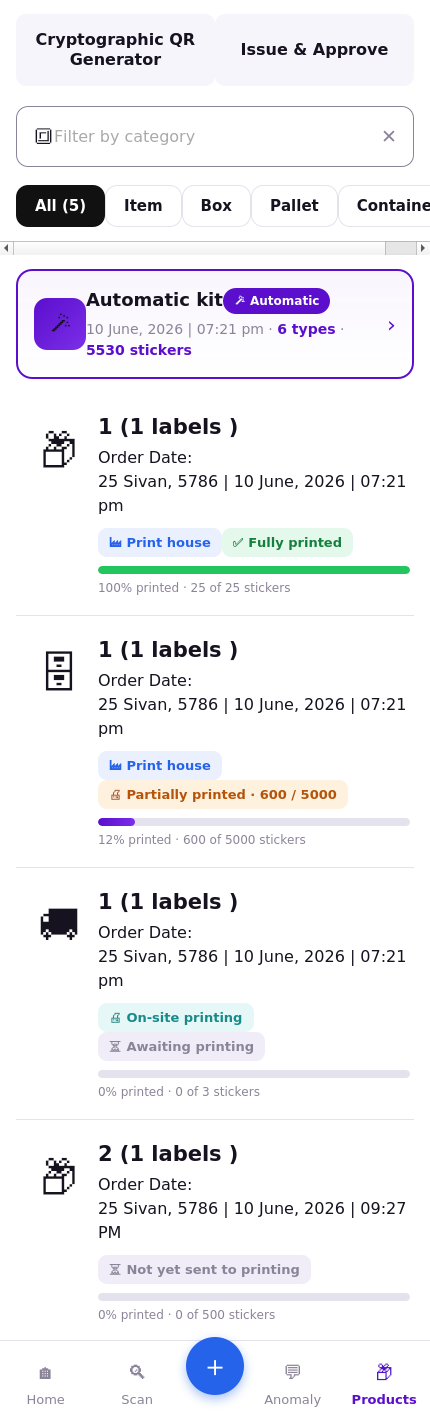
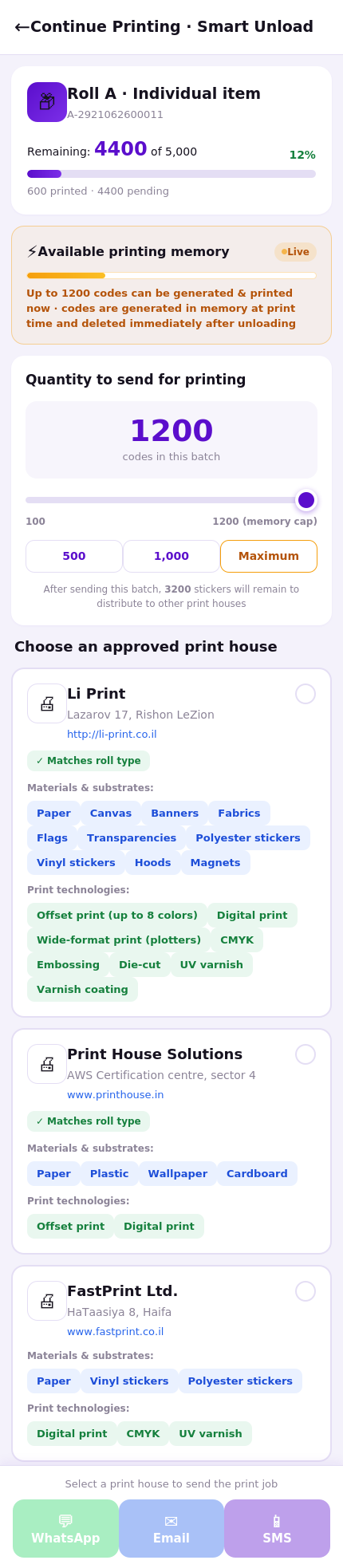
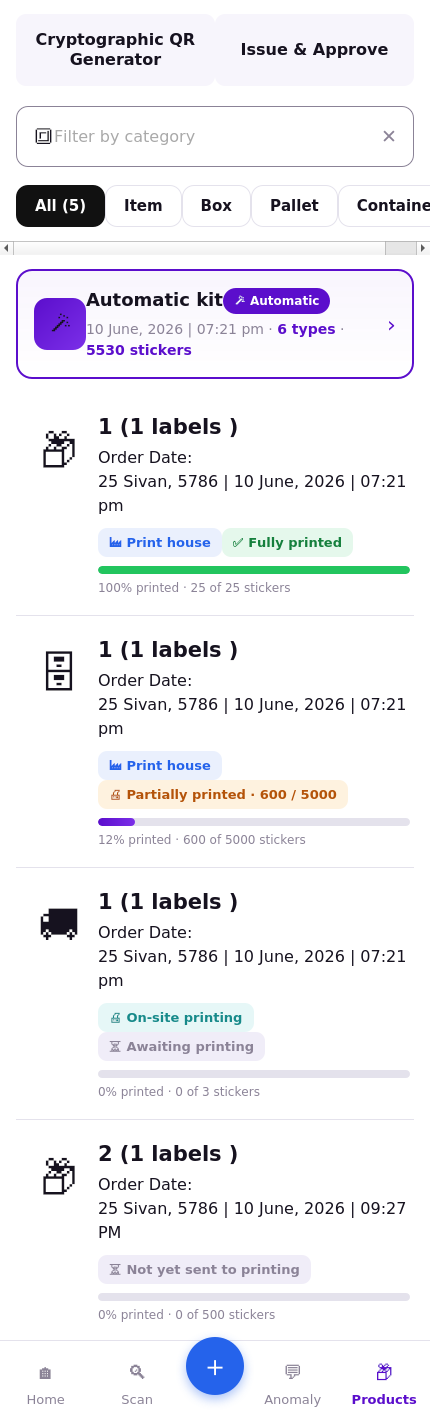
- Factory-management dashboard & roll-tracking system
- QR generation hub and kit / label-type workflow
- Product display window & digital-certificate structure
- Hebrew RTL interface with a multilingual framework
- Role-based access concept for manufacturers, regulators, certification bodies, and consumers
The next funded phase will focus on
- Integration with legacy ERP and factory-management systems
- Industrial printing-line optimization & secure print-order control
- Large-scale event-ledger testing & advanced anomaly-detection logic
- Pilot deployments with selected partners in pharma, luxury goods, certification bodies, food traceability, and ticketing
- Documentation for commercial rollout and regulatory / certification use cases
The project is best described as experimental development with a clear path toward pilot deployment and close-to-market validation.